Making Roads Safer: The Safe System Approach
Ohio LTAP spotlights U.S. DOT's Safe System Approach (SSA) in its latest newsletter (Issue1, Volume 42).
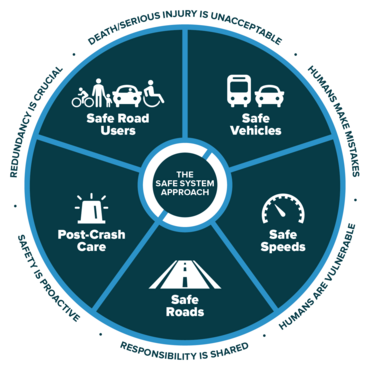
The Safe System Approach has been embraced by the transportation community as an effective way to address and mitigate the risks inherent in our enormous and complex transportation system. It works by building and reinforcing multiple layers of protection to both prevent crashes from happening in the first place and minimize the harm caused to those involved when crashes do occur.
This represents a shift from conventional safety approaches because it focuses on both human mistakes AND human vulnerability, designing a system with many redundancies in place to protect everyone. U.S. DOT's National Roadway Safety Strategy is working towards a future with zero roadway fatalities and serious injuries through infrastructure improvements, behavior change, responsible oversight, and emergency response.
Safe System Principles:
- Death and serious injuries are unacceptable
- Humans make mistakes
- Humans are vulnerable
- Responsibility is shared
- Safety is proactive
- Redundancy is crucial
Local agencies don't need massive budgets to implement Safe System principles. Simple steps like evaluating speed limits in pedestrian areas, improving visibility, installing roundabouts, and using crash data to prioritize safety investments can save lives. The Safe System Approach demonstrates that roads can be designed with built-in protection to prevent deaths and serious injuries.
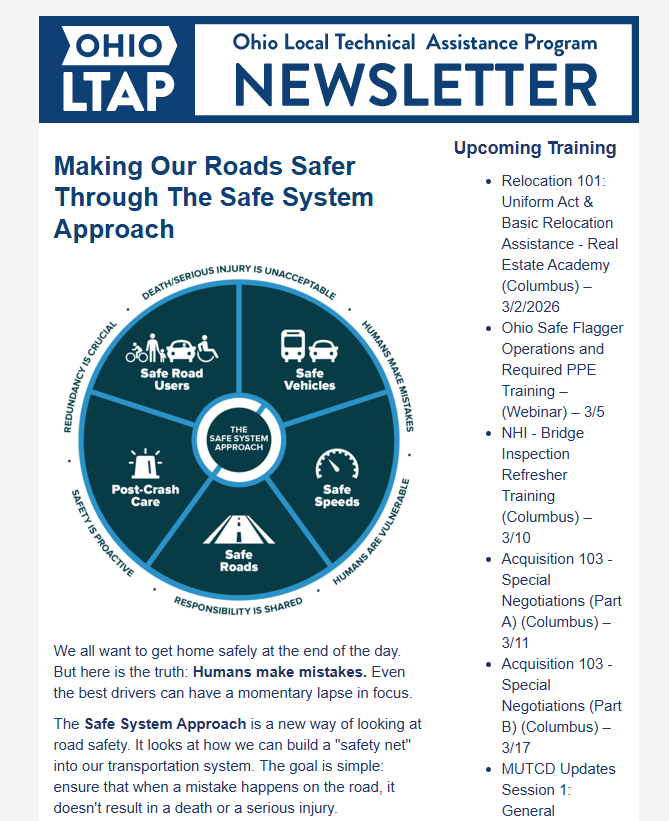
The Five Elements of a Safe System
U.S. DOT's Safe System Approach is built on five complementary objectives that work together to prevent deaths and serious injuries:
- Safer People: Encourage safe, responsible driving and create conditions that prioritize reaching destinations unharmed
- Safer Roads: Design roadway environments to mitigate human mistakes and account for injury tolerances
- Safer Vehicles: Expand availability of systems and features that prevent crashes and minimize impact
- Safer Speeds: Promote safer speeds through context-appropriate design, speed-limit setting, education, and enforcement
- Post-Crash Care: Enhance survivability through expedient emergency medical care and robust traffic incident management