Simple Tools. Safer Field Work.
A smartphone and open-source software helped automate signal sight-distance reviews, reducing field time and improving staff safety.
See how other California agencies are working smarter and safer, or let us know about your own innovation!
Across California, local public agencies are developing practical solutions to everyday transportation challenges. From improving work zone safety to traffic calming measures to making maintenance more efficient, these solutions are helping public works crews be more effective at serving their communities.
Some ideas involve new technology. Others might be simple improvements to familiar procedures. The best ones have something in common: they solve real problems and are worth sharing.
Start with a challenge. See how another agency approached it. Take away an idea that may work in your own community.
A smartphone and open-source software helped automate signal sight-distance reviews, reducing field time and improving staff safety.
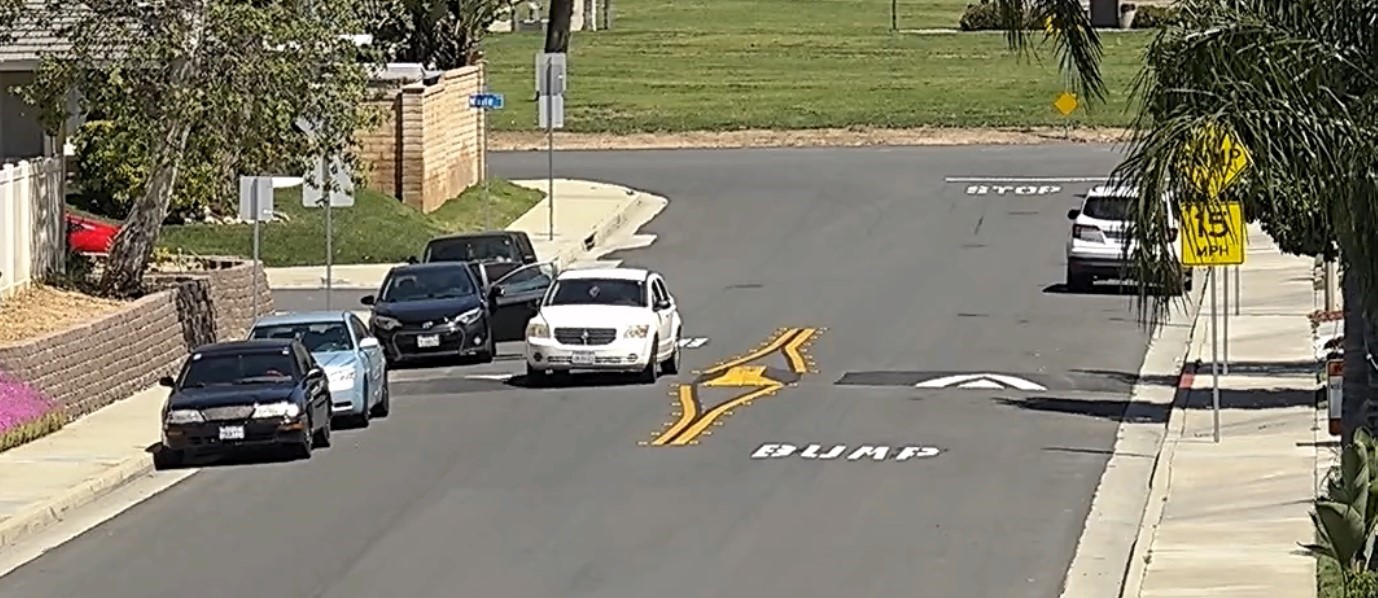
Speed cushions provided a cost-effective way to address speeding concerns in residential neighborhoods.
A reusable kit combines portable lighting, reflective signs, and temporary markings to improve visibility during short-term street work.
Flexible posts and high-visibility pavement markings create a stronger visual gateway that encourages lower speeds near schools.
Browse practical transportation innovations by topic. Open a section below to view its stories.
Speed cushions provided a practical and cost-effective way to address speeding concerns in residential neighborhoods.
A reusable kit combines portable lighting, reflective signs, and temporary markings to improve visibility during short-term street work.
Flexible posts and high-visibility pavement markings create a stronger visual gateway that encourages lower speeds near schools.
A smartphone and open-source software helped automate signal sight-distance reviews, reducing field time and improving staff safety.
Durable QR labels connect field staff directly to sign records, installation dates, inspection notes, and replacement history.
Existing fleet cameras help staff document pavement problems during routine trips and organize them on a shared map.
A vehicle-mounted rack allows crews to collect traffic cones more efficiently while reducing repeated lifting and roadside exposure.
A lightweight wheeled platform carries cameras and inspection tools, reducing setup time and the number of staff needed in the field.
A visual board gives crews a shared view of assignments, priorities, equipment needs, and completed work without specialized software.
Reclaimed pavement material is processed into a lower-cost patching mixture for temporary roadway repairs.
Replaceable screen panels simplify debris removal and allow damaged components to be replaced without rebuilding the entire unit.
A small solar charging station keeps handheld maintenance equipment ready for use at remote facilities.
Neighboring agencies share specialty tools that are useful but too infrequently needed for every agency to purchase separately.
Simple route and fuel-use comparisons help supervisors identify unnecessary travel and improve daily crew assignments.
Prepacked repair kits place commonly needed tools, materials, and checklists together so crews can respond without repeated supply trips.
BABM-recognized innovations are often evaluated for benefits such as cost savings, time savings, impact, ingenuity, and whether other agencies can adapt the idea.
California public agencies are invited to share practical transportation solutions, process improvements, tools, and approaches that could help others across the state.
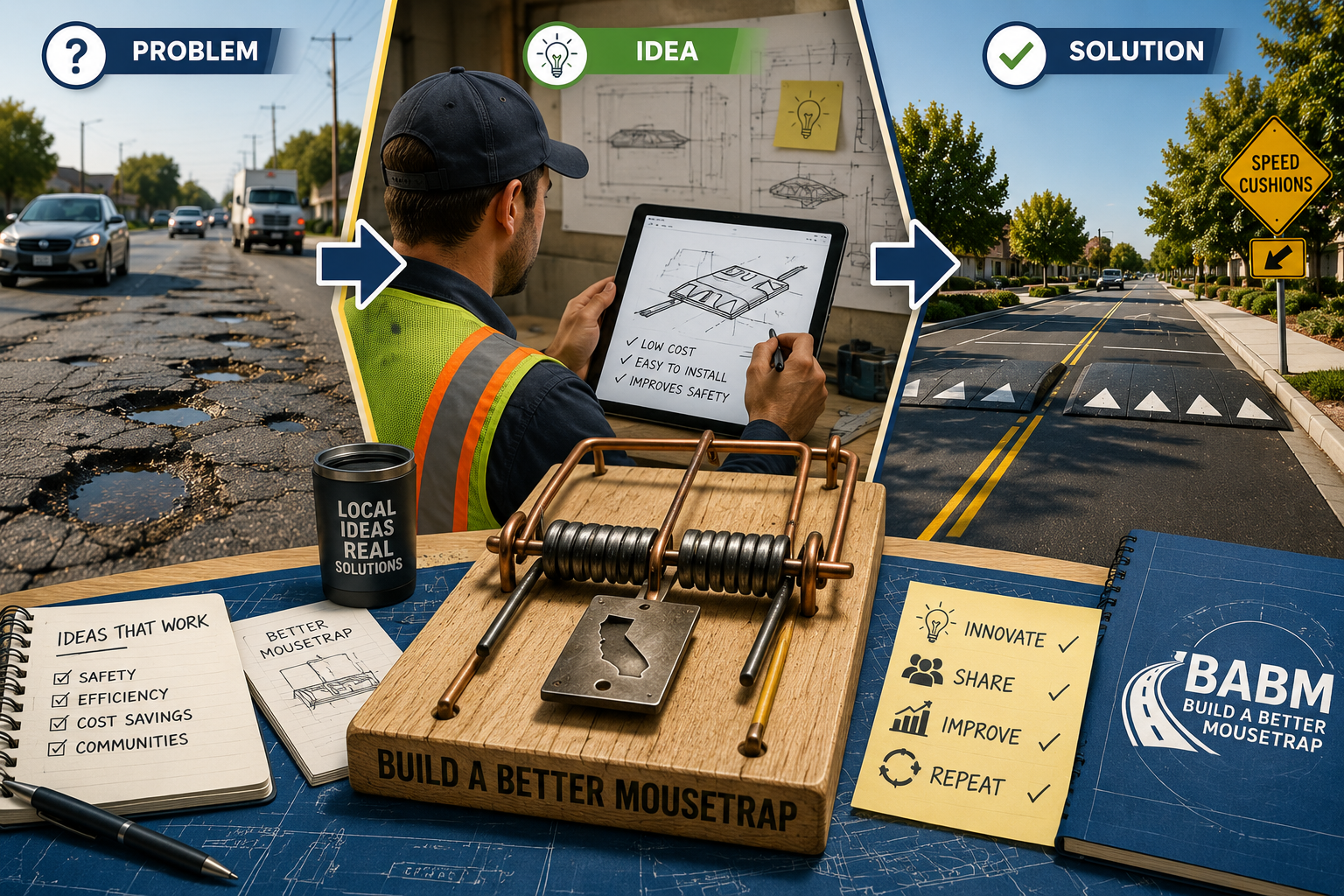
Build a Better Mousetrap (BABM) is a recognition program for practical transportation innovations created by local and tribal agencies.
It helps share ideas that improve safety, save time, reduce costs, or make everyday work easier, so other agencies can adapt what works.
"There can be no doubt that the transportation sector is the most critical sector of our economy."
— Robert Brady
California LTAP supports local public transportation agencies across the state by providing professional training, technical assistance, knowledge transfer, and worksite best practices and innovations that help them plan, manage, and maintain their roadway infrastructure.
© Copyright Caltap.org. Website by Volatile Studios
*Required Fields