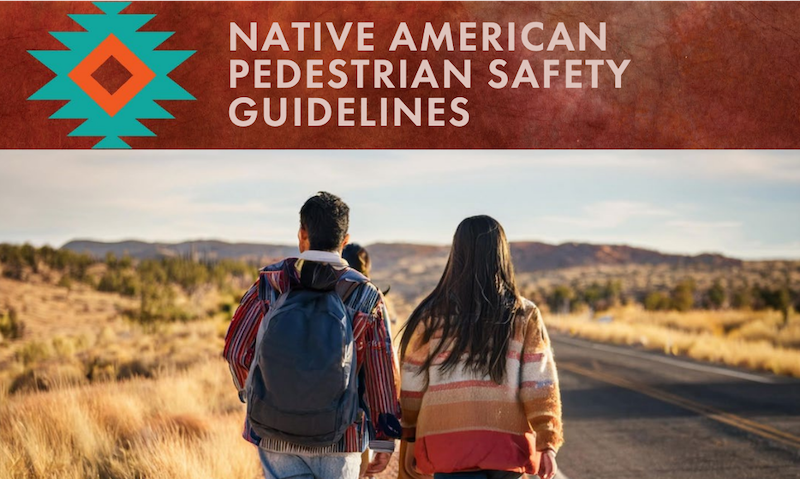
Native American Pedestrian Safety Guidelines
A new report by the Upper Great Plains Transportation Institute (UGPTI) examines the importance of pedestrian and bicycle safety in Native American communities, highlighting how culturally sensitive infrastructure improvements can reduce injuries and transportation costs while advancing public health and environmental sustainability.
Active transport modes, especially walking and biking, play a significant role in many Native American communities due to traditional practices, lower vehicle ownership rates, healthy lifestyles goals and established travel patterns.
Therefore, prioritizing pedestrian safety in high-traffic areas can yield substantial benefits, including injury prevention through improved sidewalks, crosswalks, and bike lanes, as well as increased awareness of road safety. Investments in capital improvements, especially along culturally sensitive trails and paths, not only enhance accessibility and safety but also shows respect to native heritage.
Such investments contribute to improved public health by promoting physical activity and supporting environmental sustainability through reduced emissions. Overall transportation costs are also reduced when people walk and bike. Addressing pedestrian needs comprehensively is vital to ensure that active transport remains a safe, viable, and culturally aligned option for all communities.
These guidelines should be read and applied along with:
- Guideline Advisory Manual for Native American Pedestrian Safety Assessments
- Process Manual for Native American Pedestrian Safety Assessments
About UGPTI
The Upper Great Plains Transportation Institute (UGPTI) at North Dakota State University is a center dedicated to transportation research, education, and outreach, with the goal of advancing the safe and efficient movement of people and goods through innovative services.
UGPTI engages in transportation research covering highways, rail, air, waterways, agricultural freight, rural road safety, and autonomous trucking.