Traffic Analysis Practices for Non-Motorized Modes
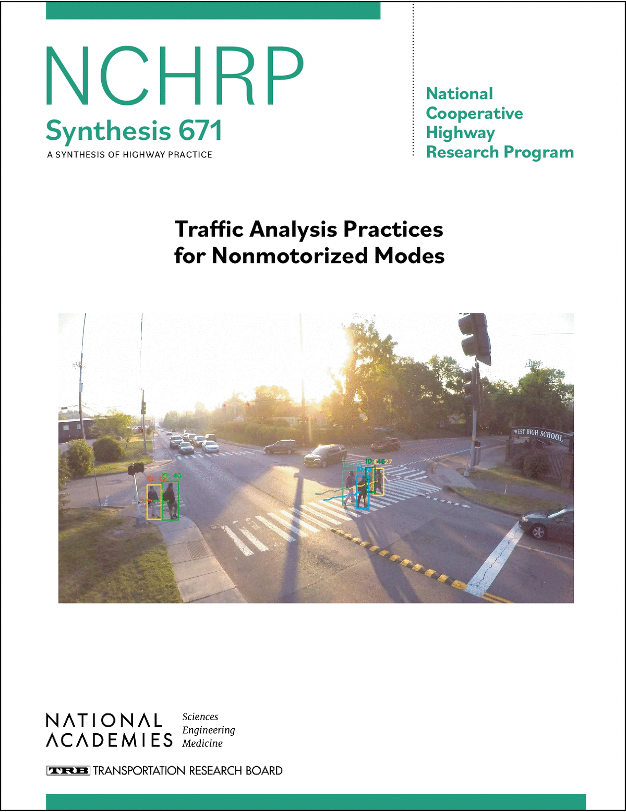
Traffic Analysis Practices for Non-Motorized Modes includes information on how state DOTs define and analyze non-motorized modes, including pedestrians, bicyclists, mobility device users, and micromobility; the tools, data sources, and performance measures used in practice; and the institutional, technical, and operational challenges associated with integrating non-motorized modes into planning, design, and operations.
Traffic analysis has traditionally focused on motorized travel, but transportation agencies increasingly need to assess conditions for people walking, bicycling, and using mobility or micromobility devices.
Although multimodal analysis methods are available, limited information exists on how state DOTs incorporate non-motorized traffic analysis into planning, design, and operations.
The report also documents emerging approaches such as level of traffic stress, multimodal level-of-service methods, statewide count programs, and the use of GIS-based and data-driven analytical tools.
Who is NCHRP?
The National Cooperative Highway Research Program conducts research in problem areas that affect highway planning, design, construction, operation, and maintenance in the United States.
Administered under the Transportation Research Board (TRB), NCHRP is a collaborative effort between the Federal Highway Administration (FHWA) and the National Academy of Sciences.