Evaluating Pedestrian Route Choice at PHBs
A recent study tracked nearly 800 pedestrian routes before and after Pedestrian Hybrid Beacon (PHB) installation on a seven-lane arterial in Albuquerque, New Mexico. It found pedestrians were willing to walk about 77 feet out of their way to use the crossing.
The framework of the study utilized a three-tiered pedestrian routing model to evaluate how PHBs affected route choices and crossing delays. Researchers compared 389 routes before the installation with 393 routes after to see if pedestrians would alter their paths for a safer crossing.
The data revealed that, while estimated delays for uncontrolled crossings ranged from 64.4 to 78.8 seconds, pedestrians only tolerated a mean PHB delay of 47.2 seconds. Consequently, only 10.2% of pedestrians who could have gone out of their way to use the beacon actually did so, and only 20.8% of those whose shortest path led right past a PHB chose to utilize it.
The findings suggest that PHBs are effective spot treatments at specific locations but may not meaningfully improve safety across an entire high-injury corridor.
What are PHBs?
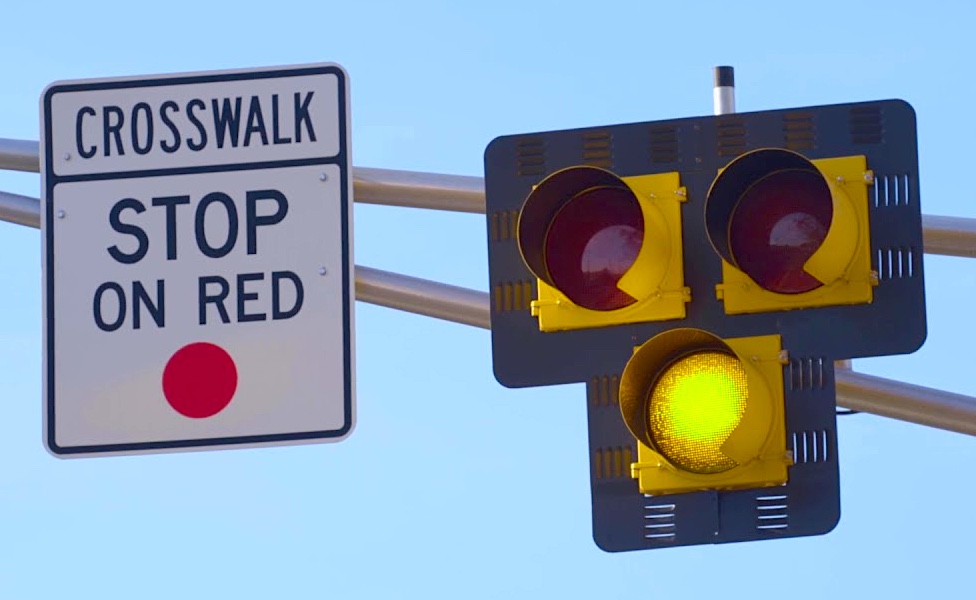
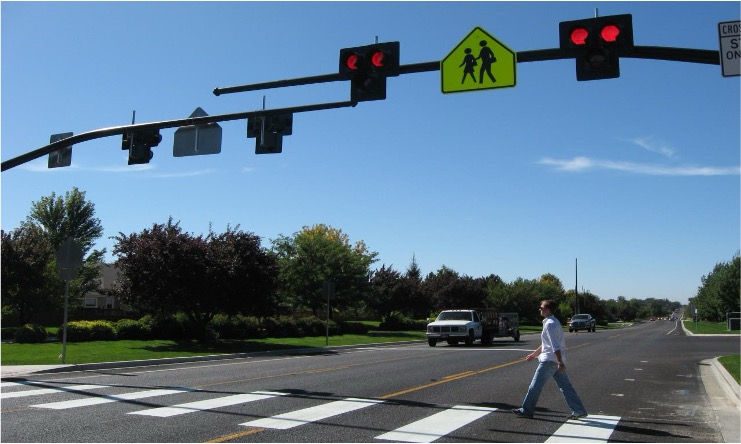
A Pedestrian Hybrid Beacon is a traffic control device designed to help pedestrians safely cross higher-speed roadways at mid-block crossings and uncontrolled intersections.
PHBs consist of two red lenses above a single yellow lens, which remain dark until the call button is pushed. This initiates a yellow-to-red sequence of flashing and steady lights that direct motorists to slow and come to a stop.